TIRANA, June 28 – Medieval burials, Hellenistic buildings and vessels from the Roman period as well as Turkish baths discovered by a Polish-Albanian archeological mission in the northern Albanian city of Shkodra are being displayed in an exhibition marking six years of joint excavations.
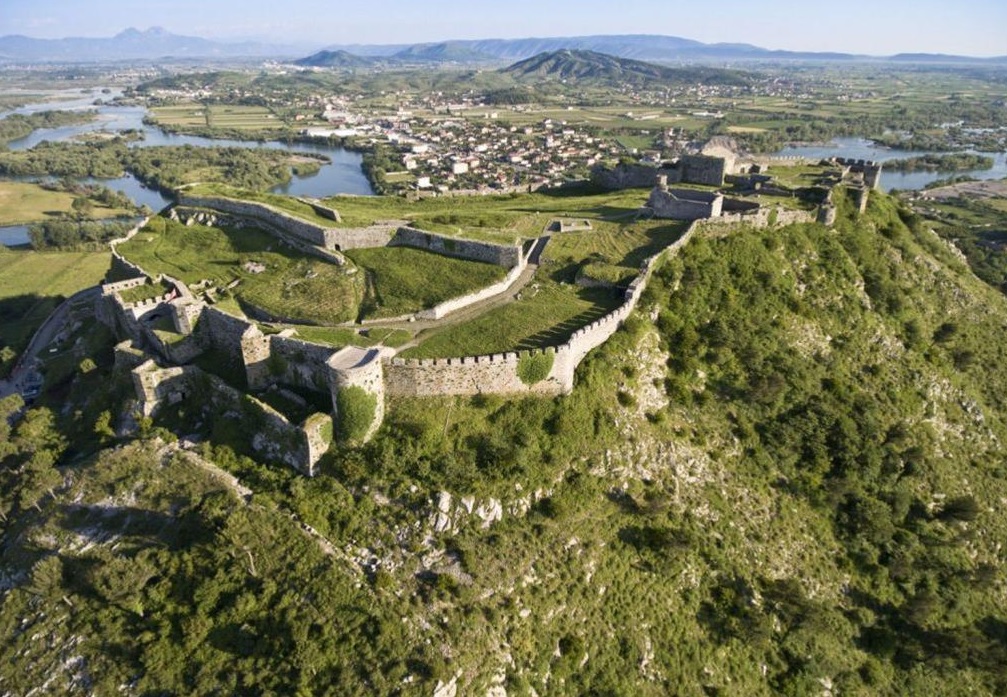
The latest discoveries in the archeological area round the landmark Rozafa castle are testimony to the ancient Illyrian culture and the development of northern Albania’s most important area, archeologists say.
In their latest Albania mission, Polish archeologists scanned the large area of the Rozafa castle using a wide range of non-invasive methods allowing them to go under the surface without performing excavations.
“The research was laborious because of the great depths, at which the ancient ruins are located, which necessitated multiple scanning of the area for the various parameters of measuring instruments,” the head of the research project, Prof. Piotr Dyczek from the Antiquity of Southeastern Europe Research Centre of the University of Warsaw told PAP, a portal focused on Polish scientists’ achievements.
Researchers have been able to recreate the original layout of the stronghold – completely different than the layout of the buildings seen today in the area. They also found outlines of dozens of houses, as well as the streets and walls from 2,000 years ago. Currently, these objects are covered by 7-meter layer of soil and have never been studied archaeologically.
Prof. Dyczek points to one particularly important discovery. “It is a well preserved Ottoman latrine located in the vicinity of the fourteenth-century Turkish bath that we have excavated. It is one of the oldest sanitary complexes of this type in today’s Albania,” he said.
In Shkodra and six neighboring ancient cities, archeologists took a series of photos using a drone, perpendicular to the ground. “Their importance lies in the fact that they were built perhaps already in the IV and III centuries BC. Studying them will be of extraordinary importance for determining the identity of the enigmatic Illyrian culture, which flourished in the following centuries,” added Dyczek.
Ancient Shkodra on the banks of the great Lake Shkodra is one of the most important places for the history of Illyria, as well as of the entire Balkan region. From Neolithic times it was an important and rich settlement, located at the crossroads of major land routes and waterways. However, the peak of its splendor falls on the Illyrian times (III-II century BC). In that period it was the kingdom capital.
Despite the significance of the city and the Illyrian kingdom, its history still is shrouded in secrets. It is not known how the process of creating the kingdom proceeded, by whom and why it was initiated. Polish archaeologists have been working to unravel the mystery since 2011, when they began extensive research in Albania. This year, they worked in the area in May and June.
Back in 2011, at the launch of the joint Polish-Albanian mission, archeologists discovered an ancient inscription in Greek and Roman shedding light on Shkodra’s political status and its organization in the third century.
The “Secrets of Shkoder” exhibition, organized by the Polish embassy in Tirana in cooperation with the Center for Research on the Antiquity of South-Eastern Europe of the Warsaw University will remain open at the National History Museum until July 5.