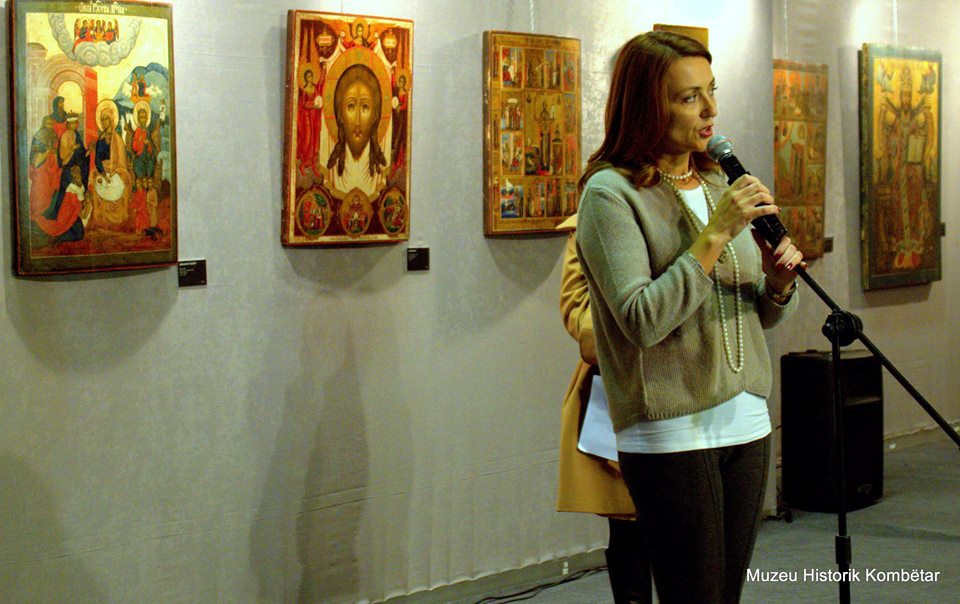
TIRANA, Dec. 15 – A collection of Russian icons from the 16th to 19th centuries is being displayed in Albania for the first time in an exhibition called “A collection for passion.”
“The opening of this exhibition is very special as the Albanian public is being introduced for the first time with Russian icons after the fall of Byzantium,” said Dorina Arapi, the curator of the icons pavilion at the National Museum of History in Tirana, where the exhibition will be open until Dec. 20.
Migena Hajdari, an Albanian artist who runs a gallery in Italy’s Padua and the curator of this exhibition, says the icons on display have been selected from a collection of more than 5,000 Russian icons also influenced by the passion of her Italian husband.
“It is true that the icons belong to religious art but they are real artworks and growing investments in the art market,” she says.
Ever since Russia’s conversion to Christianity in 988, icons have been an important part of the liturgy of the Russian Orthodox Church and increasingly were an important part of the domestic life of ordinary Russians in Imperial times. With the expansion of the Russian Empire between the 16th and 19th centuries and the creation of a Russian Diaspora through emigration in the 19th and early 20th centuries their presence extended into the Baltic countries, Western Europe and the New World, says the Icon-Rus Gallery.