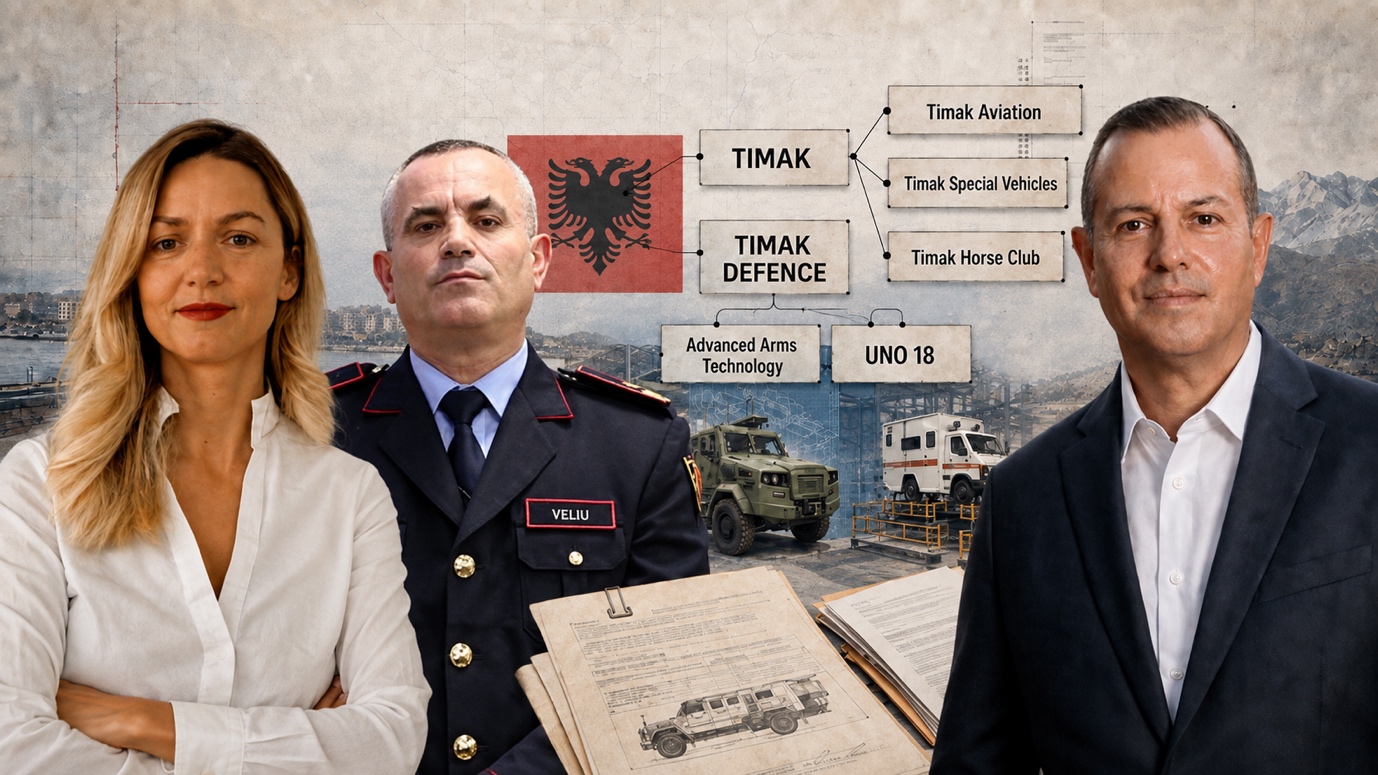
Investigators examine weapons deals, state-linked defense companies and the role of businessman Ron Yeffet after allegations of international arms trafficking surfaced in recordings released by former Deputy Prime Minister Arben Ahmetaj.
Tirana Times, October 03, 2026 – A series of searches by Albania’s special prosecutors has opened a potentially significant new line of investigation into the country’s rapidly expanding defense industry, placing under scrutiny companies, contracts and individuals associated with a sector that Prime Minister Edi Rama’s government has promoted as a strategic national success.
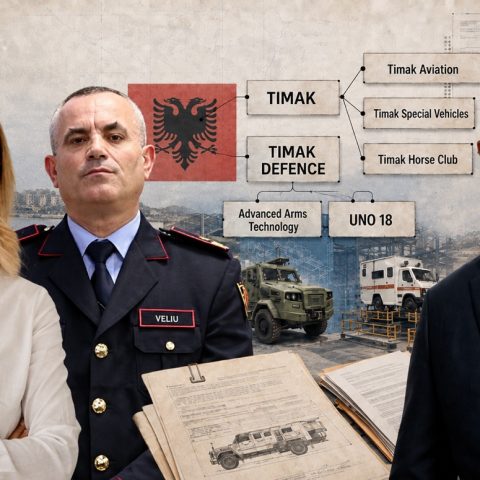
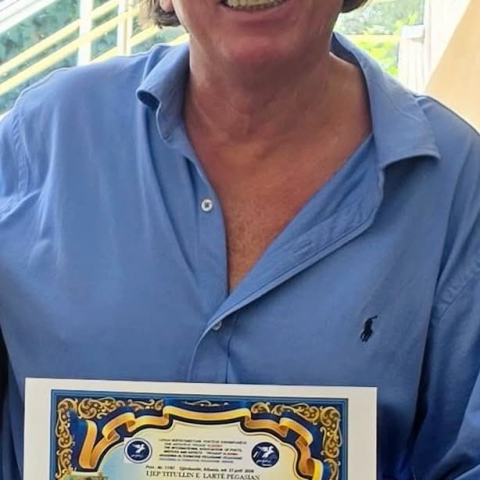
Investigators from the National Bureau of Investigation, acting under Albania’s Special Structure Against Corruption and Organized Crime, carried out searches Oct. 2 at locations connected to Israeli-American businessman Ron Yeffet, entrepreneur Arjeta Puca and Ardi Veliu, the head of the state-owned defense company KAYO. Investigators also searched the Ministry of Defense, according to Albanian media reports.
Documents and electronic devices were reportedly seized, including Veliu’s phone. The special prosecution office has not yet publicly detailed the full scope of the investigation or announced individual criminal charges in connection with the searches.
The operation follows allegations and audio recordings made public in September by former Deputy Prime Minister Arben Ahmetaj. The recordings, whose full authenticity and context have not been independently established, purportedly involve discussions between Yeffet and Ukrainian businessmen about international arms transactions.
According to material published by Ahmetaj, the discussions included the possibility of ammunition being produced in Africa, brought to Albania for packaging and subsequently sold to other markets. Ahmetaj alleged that the arrangements were designed to use Albanian companies and the KAYO structure to avoid normal competitive procedures.
Those allegations have not been proven in court.
What gives the investigation broader significance is where investigators are looking: at the intersection of Albania’s Defense Ministry, a state-owned military company and private businesses that have become central to the government’s effort to rebuild a domestic defense industry.
From government showcase to prosecutors’ scrutiny
KAYO was established as a state-owned company to revive the production and commercialization of weapons, ammunition, military equipment and technology. The government has also allowed the company to enter joint ventures with private businesses.
One of those partnerships is TIMAK Defence, in which the private partner holds 80% and KAYO 20%.
The government has strongly promoted the venture. On July 31, Prime Minister Rama attended the delivery of 40 tactical vehicles produced by TIMAK Defence for the Albanian Armed Forces, presenting the event as a historic step in the revival of Albania’s military industry.
A second company now attracting attention is Advanced Arms Technology, or AAT. According to commercial information cited in Albanian media, it was established under a similar formula, with private interests holding 80% and KAYO 20%. Its registered activities include the production, assembly and trade of weapons, military drones and related equipment, including for export.
The emerging question is therefore not simply whether Albania has created companies capable of producing and trading military goods. It has.
The issue now facing investigators is whether the structures, contracts and transactions surrounding those companies complied with Albanian law — and whether the allegations contained in the recordings correspond to actual international arms transactions.
The weapons question
The controversy has been sharpened by apparently conflicting statements from within the Defense Ministry over whether weapons produced in Albania are already being used abroad.
On April 3, Defense Minister Ermal Nufi told Parliament that Advanced Arms Technology was producing weapons and that those weapons were already “in use today in conflicts somewhere.”
“Kemi dhe AAT, Advanced Arm Technology e cila prodhon armë dhe këto armë, siç e thashë edhe një herë, janë në përdorim sot në konflikte diku,” Nufi said, according to the material reviewed for this analysis.
The minister did not identify the countries, buyers or conflicts involved.
A deputy defense minister later offered a different account, saying Albania was not currently exporting armaments.
That apparent contradiction now takes on greater importance.
If weapons produced or processed through Albanian companies have reached foreign conflict zones, investigators may seek to establish who produced them, who purchased them, under what licenses they were exported and through which companies and jurisdictions the transactions were conducted.
Those questions go to the heart of the allegations made by Ahmetaj.
The role of Ron Yeffet
The investigation also puts renewed attention on Ron Yeffet, an Israeli-American businessman who has emerged as a central figure in the controversy surrounding Albania’s new defense ventures.
Ahmetaj has repeatedly alleged that Yeffet benefited from privileged access to government-backed projects and that the structure of KAYO and its private partnerships was used to move public assets and contracts into ventures dominated by private shareholders.
According to the material published in September, Ahmetaj claimed that joint ventures involving military assets could reduce normal procurement and auditing safeguards, while allowing private partners to gain control over state resources.
Again, those remain allegations.
But the Oct. 2 searches represent an important shift. What began as accusations by a former deputy prime minister, amplified through television interviews and leaked recordings, has now led to direct investigative action involving companies and officials associated with the defense sector.
Potential implications for the government
For Prime Minister Rama’s government, the investigation comes at a sensitive point.
The rebuilding of Albania’s defense industry has been presented as part of the country’s broader strategic transformation — strengthening domestic military capabilities, attracting foreign investment and positioning Albania as a potential producer and exporter within the expanding European defense market.
Rama has personally promoted several of the companies now linked to that effort.
The political implications would become considerably more serious if investigators were to establish that public assets, state contracts or military production were used in unlawful international arms transactions or to benefit private interests through preferential arrangements.
At this stage, however, there is no such finding.
Searches, document seizures and the examination of electronic devices are investigative measures, not proof of criminal responsibility.
But the case has moved beyond political accusation.
Investigators are now examining the companies, contracts and individuals at the center of Albania’s emerging arms industry. The key questions are increasingly concrete: What was produced? What was sold? Where did it go? Who authorized the transactions? And who ultimately benefited?
The answers could determine whether the controversy remains a dispute over governance and transparency in Albania’s new defense industry — or develops into a much broader investigation involving corruption and international arms trafficking.