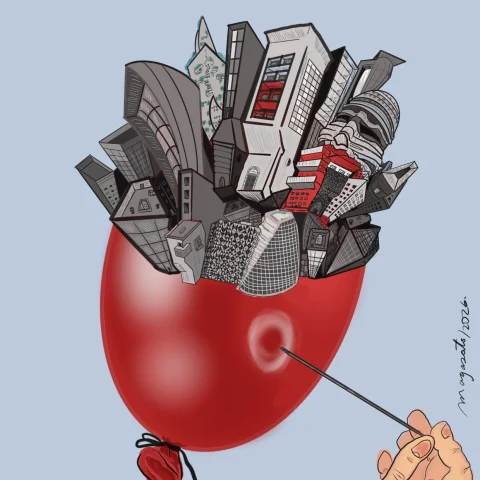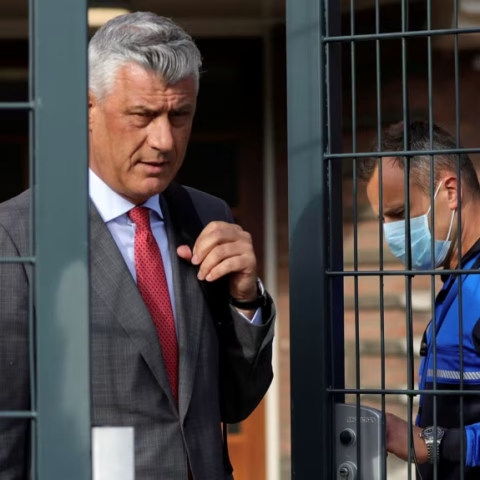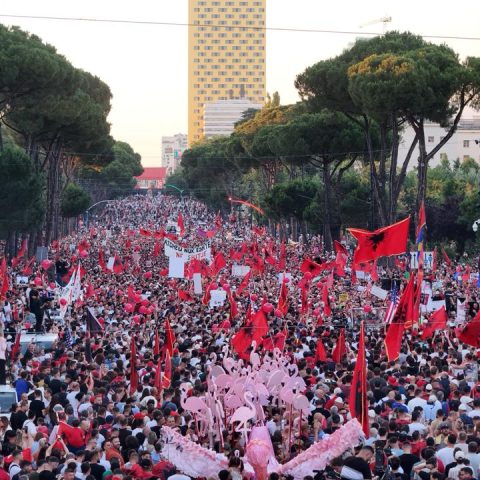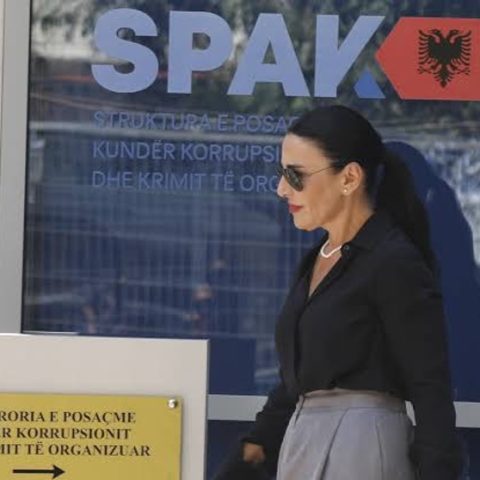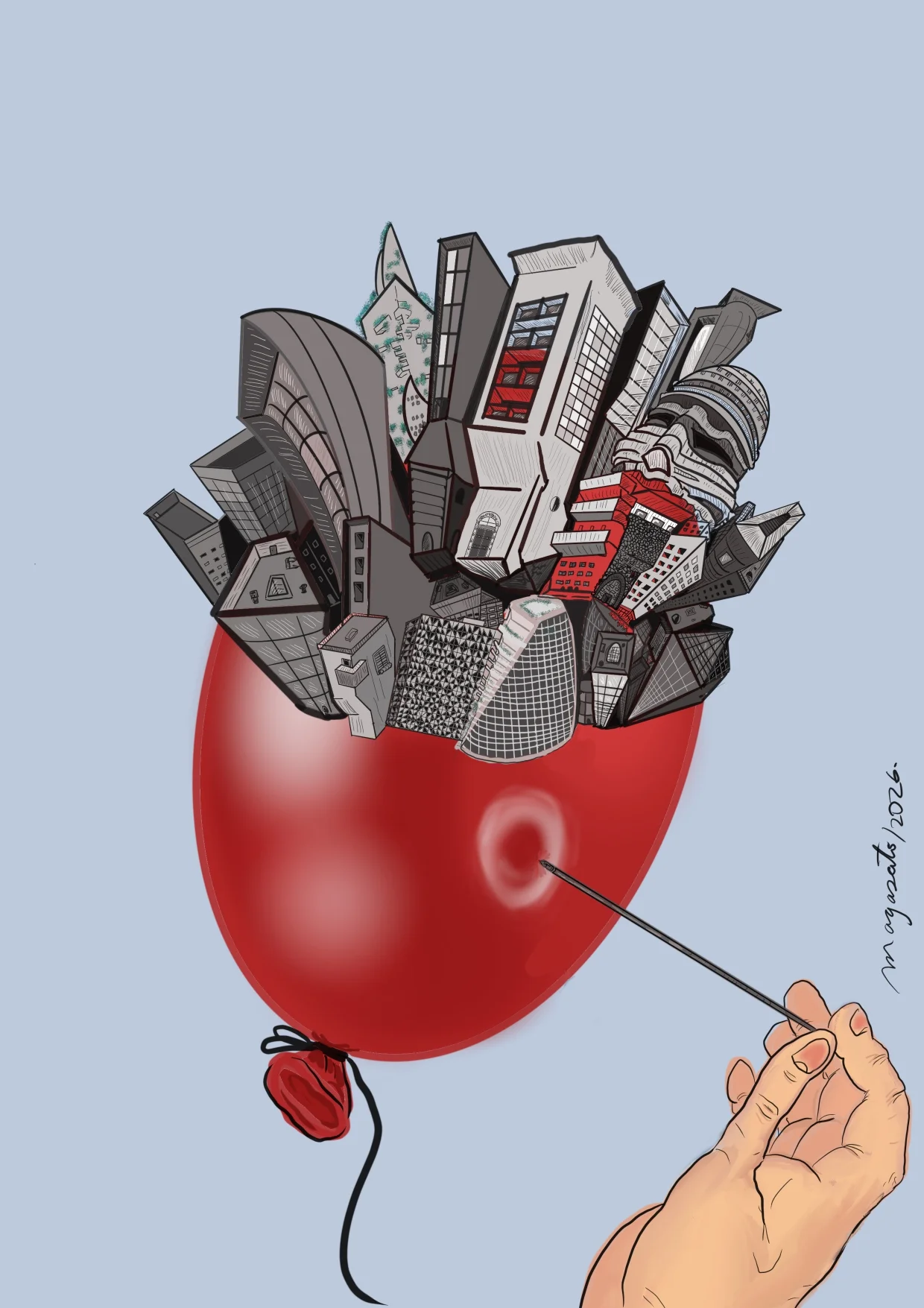
Drug trafficking and systemic corruption are feeding billions into an economy increasingly dominated by construction, raising troubling questions about the relationship between organized crime, political power and the rule of law.
By Zef Preçi
TIRANA, Albania – Money laundering has become one of Albania’s most serious economic and political problems. What was once largely associated with criminal organizations operating outside the country has increasingly become a domestic challenge, affecting investment, property markets, public institutions and political decision-making.
Two major sources stand out: international drug trafficking, particularly cocaine, and systemic corruption closely connected to political power.
The first generates enormous criminal revenues abroad. The second diverts public resources into private hands through corruption, manipulated public contracts and the abuse of political authority. Together, they create a powerful flow of illicit money seeking entry into Albania’s legal economy.
The distinction between organized crime and organized politics has become increasingly difficult to draw. Criminal networks are no longer simply attempting to evade the state. There are growing indications that they seek to influence public decisions, business opportunities, elections and the allocation of public resources.
This relationship represents a threat not only to economic development but also to Albania’s democratic institutions.
The billions behind the economy
An assessment of available financial and law enforcement data suggests that between 700 million and 1.4 billion euros in criminal proceeds may enter Albania’s economy annually, equivalent to approximately 2.5% to 5% of gross domestic product.
These are estimates rather than precisely documented transactions, but their magnitude is alarming for a country with an economy of approximately 27 billion euros.
Albanian criminal networks have developed extensive operations in international cocaine trafficking, connecting South American supply routes with European markets. Repeated investigations and arrests across Europe demonstrate the scale and international reach of these organizations.
United Nations drug reports have documented the enormous expansion of global cocaine production and trafficking. Seizures represent only the intercepted portion of this illegal trade, leaving substantial revenues available to criminal networks.
The second major source is corruption. Public procurement, infrastructure investments, concessions and privileged access to state resources create opportunities for the diversion and laundering of public money.
When political protection and criminal financing reinforce each other, corruption ceases to be an isolated offense. It becomes part of a system in which economic power and political influence are mutually dependent.
The construction boom and the mystery of empty buildings
Nowhere are the contradictions of Albania’s economy more visible than in construction.
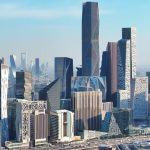
Tirana’s skyline has been transformed by expensive residential towers, while luxury developments have spread along the Adriatic and Ionian coasts. Yet this extraordinary building boom has coincided with a declining national population, continued emigration and housing prices increasingly beyond the reach of ordinary citizens.
Albania’s 2023 census identified approximately 356,000 unoccupied housing units, nearly one-third of the country’s housing stock. Not all are permanently vacant, and empty properties do not automatically indicate criminal activity. Nevertheless, the scale of construction raises legitimate questions about financing and actual demand.
A study of construction activity between 2015 and 2024 identified approximately 16.2 billion euros in building permits, compared with 7.1 billion euros in financing traceable through bank lending and foreign direct investment. The resulting 9.1 billion euro gap does not establish that the difference is criminal money, but it highlights the need for greater financial transparency.
An investigative documentary released in November by the American outlet Channel 5 with Andrew Callaghan brought international attention to these contradictions. Visiting luxury coastal developments, including apparently largely unoccupied resort complexes, the documentary examined allegations linking drug money, real estate and politically connected investment projects.
The documentary also questioned Prime Minister Edi Rama about organized crime and corruption, allegations he rejected.
The images of expensive but largely empty developments illustrate a fundamental concern: construction can provide an attractive destination for money whose origins are difficult to establish.
For criminal investors, real estate offers opportunities to transform illicit cash into apparently legitimate assets. Unlike productive investment, such development does not necessarily depend on sustained consumer demand or the creation of long-term employment.
The consequences extend well beyond the property market. Illicitly financed businesses can outbid legitimate competitors, distort land prices and redirect investment away from manufacturing, exports and other productive sectors.
An alarming failure to recover criminal assets
Despite increased investigations, Albania’s ability to identify and confiscate criminal wealth remains limited.
In 2025, the country’s financial intelligence authorities received 1,759 suspicious activity reports and referred 269 cases for further investigation. Banks and notaries accounted for most reports, while real estate agents submitted only five. Construction companies submitted none.
This is particularly disturbing because construction and property transactions are considered among the sectors most exposed to money laundering.
The results of asset recovery are equally revealing. According to the European Commission’s 2026 assessment, Albania reported approximately 61 million euros in seized assets in 2025, but only 1.9 million euros in confiscated assets.
Although seizures and final confiscations are different legal procedures and cannot be directly equated, the discrepancy illustrates the difficulty of permanently depriving criminal organizations of their wealth.
Albania has strengthened its anti-money laundering legislation and its cooperation with European law enforcement agencies. Yet legal reforms alone cannot compensate for weak enforcement, insufficient financial investigation and possible political interference.
When dirty money becomes political power
The consequences of money laundering extend beyond economics.
Illicit wealth can finance political influence, corrupt public officials and create networks of dependency linking business interests, criminal organizations and political decision-makers.
The danger is a gradual transformation of the state itself, in which public institutions formally retain their authority while important decisions are increasingly shaped by private interests operating outside democratic accountability.
For ordinary Albanians, the consequences are tangible: unaffordable housing, unfair business competition, weakened public services and a growing perception that wealth and political connections matter more than law and merit.
Albania cannot address this problem simply by increasing the number of investigations or announcing new anti-corruption strategies.
It needs rigorous verification of the sources of construction financing, greater transparency over property ownership, effective scrutiny of major public contracts and much stronger international cooperation to trace criminal proceeds.
Above all, it needs independent institutions capable of investigating the relationship between criminal money and political power without fear or interference.
Money laundering is no longer merely a financial crime. It is a structural threat to Albania’s economy, democratic institutions and European future.
The central question is no longer simply how much dirty money enters Albania, but how deeply that money has penetrated the country’s economic and political system and whether the state has the independence and determination to confront it.