TIRANA, Albania — Albania’s Special Prosecution Office (SPAK) questioned Socialist Party lawmaker Sara Mila on Wednesday, November 11, in connection with an investigation into suspected electoral corruption during the 2025 parliamentary elections. The investigation comes amid allegations that social assistance was selectively distributed to secure votes for the ruling party in the Elbasan region.
Mila, who won the most votes among candidates in the district, with 20,225 ballots, said she appeared before SPAK as a person with knowledge of the case and denied any wrongdoing, describing the allegations against her as a campaign of political mudslinging. The questioning, initially opened by prosecutors in Elbasan and later transferred to SPAK, reportedly involves wiretapped communications between local officials and suspected irregularities in the allocation of economic assistance to vulnerable families.
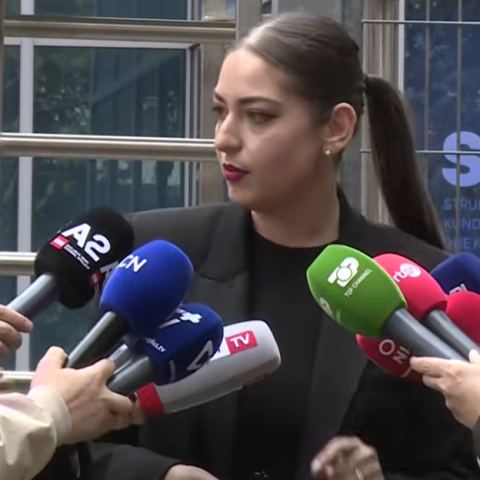
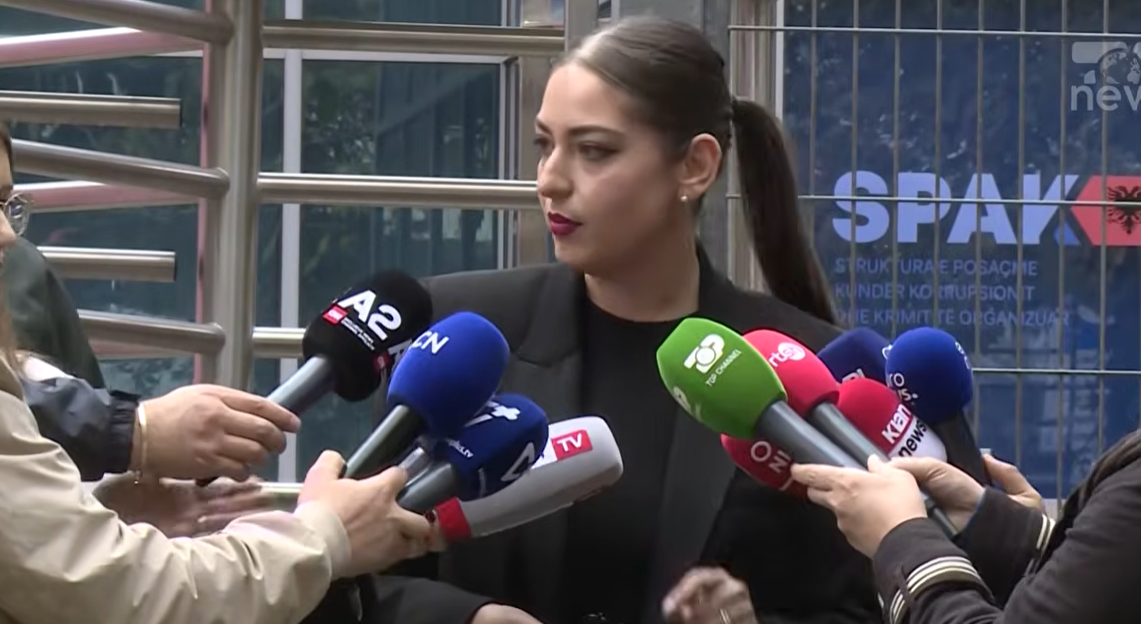
Mila spent around 40 minutes at SPAK before addressing journalists outside the prosecution office. She said she had provided testimony and would cooperate with investigators whenever necessary.
“Many have thrown mud at me from the machinery of the old politics. This is a very good moment to show my dignity. There is investigative secrecy; I am a person with knowledge of the case, and I have given my testimony,” Mila said. “I will be here whenever and as often as SPAK and the justice authorities need me.”
The MP also said she believed in the law and dismissed the allegations as an attempt by political opponents to discredit her. She did not elaborate on the questions asked by prosecutors, citing investigative secrecy.
The investigation centers on suspected abuses in the economic assistance program in the municipality of Peqin, particularly in the Gjocaj administrative unit. According to details from the investigative file reported by Albanian media, the number of families receiving economic assistance in the area allegedly rose from 110 to 320 in November and December 2024, as preparations for the 2025 parliamentary election were beginning.
Prosecutors reportedly identified significant irregularities in the beneficiary lists, including the registration of people who were not eligible for assistance. One resident, for example, allegedly discovered that he had been registered as a beneficiary despite having lived in Greece for several years and never applying for the support.
The file also reportedly contains intercepted communications suggesting that local officials discussed expanding the number of beneficiaries during the electoral campaign. In one message sent to a local administrator in June 2025, after the election, a resident complained about not receiving that month’s assistance, adding: “I haven’t received the economic assistance for June, nor the welfare payment. I respected you; I gave you my vote.”
The reported communications have raised suspicions that public assistance was used to reward political support and influence voting behavior. Investigators are also examining whether Mila intervened in expanding beneficiary lists in exchange for votes for the Socialist Party. However, the precise extent of her alleged involvement remains unclear, and no formal charges against her have been publicly announced.
The Elbasan Prosecutor’s Office initially handled the case and reportedly divided the investigation into two parts. One was sent to trial, while the part concerning higher-ranking local officials was transferred to SPAK after prosecutors declared themselves incompetent to investigate that part. Several local officials and public institution employees have reportedly been obliged to appear before the authorities.
The case comes at a politically sensitive moment for the Socialist Party, which is facing growing scrutiny over a series of investigations involving current and former senior officials. While the cases concern different alleged offenses and are at different stages of judicial proceedings, their accumulation has intensified questions about accountability within the governing party and its relationship with public institutions.
Former Deputy Prime Minister and Infrastructure Minister Belinda Balluku is among the most prominent figures facing prosecution. SPAK formalized corruption-related charges against her in October, involving alleged interference in the awarding of two public construction contracts worth more than 200 million euros. The charges include violations of equal participation in public tenders, passive corruption involving high-ranking state officials, and money laundering.
Prime Minister Edi Rama dismissed Balluku from her government position in February, but Parliament later rejected a request to lift her parliamentary immunity, preventing her arrest. The decision has become a major source of political confrontation, with opposition figures accusing the government of shielding senior officials from justice.
Rama has rejected the criticism, arguing that the parliamentary decision did not obstruct prosecutors’ work. “I do not protect anyone from justice,” he said in October, adding that the government had instead defended the justice system against what he described as bias.
Another prominent case involves former Health Minister Ilir Beqaj, who appeared before the Special Court against Corruption and Organized Crime on Tuesday in connection with the State Agency for Strategic Programming and Aid Coordination (SASPAC) investigation. SPAK has charged Beqaj with corruption related to his management of the agency, failure to declare assets, fraud with serious consequences, and violations of equality in public tenders. He is also a defendant in the separate investigation into the health sector’s sterilization concession. Beqaj, who was arrested in July 2024, was transferred from prison to house arrest in July 2026.
Tirana Mayor Erion Veliaj, another senior Socialist Party figure, remains in pretrial detention as his case proceeds through the Special Court. He faces allegations of corruption and money laundering linked to municipal funds, business interests and public contracts. His detention has also exposed tensions within the ruling party. On Tuesday, Veliaj requested permission to attend the Socialist Party’s National Assembly meeting on Nov. 14, either in person or by videoconference, arguing that his detention should not deprive him of his political rights.
The investigations have unfolded alongside mounting domestic and international criticism of Albania’s electoral environment and the government’s handling of corruption allegations. Opposition leader Sali Berisha has repeatedly accused the Socialist Party of using state resources and public institutions to secure electoral advantages. Following a visit to SPAK earlier this month, Berisha accused the prosecution of failing to address alleged electoral violations during the May 11, 2025, election.
“Electoral malpractice in Albania has been documented by key international organizations responsible for monitoring elections. It has reached its most extreme and brutal form, that of a party-state,” Berisha said on Nov. 2.
Concerns have also been voiced in the European Parliament. German lawmaker Michael Gahler, speaking during a meeting of the Parliament’s Foreign Affairs Committee on Tuesday, questioned the government’s commitment to ensuring free and fair elections, pointing to the Balluku immunity decision and broader corruption allegations.
“For political reasons, the immunity of the former deputy prime minister is not lifted,” Gahler said. He argued that a caretaker government could help restore public confidence, adding that it could give citizens “hope for free and fair elections.”
Gahler’s remarks reflect a wider debate over the credibility of Albania’s democratic institutions as the country advances toward European Union membership. The government has repeatedly presented judicial reform and the fight against corruption as central elements of its European integration agenda, while critics argue that the handling of high-profile cases continues to expose gaps in political accountability.
For SPAK, the investigation involving Mila presents another test of its ability to examine alleged electoral abuses involving public officials and the distribution of state resources. The central question is whether social assistance intended for families in financial difficulty was manipulated for political purposes — and whether any senior officials played a role in that process.
As the investigation continues, Mila’s appearance at SPAK does not amount to a finding of wrongdoing. But the case adds another layer to the scrutiny facing the Socialist Party, at a time when allegations of corruption, the independence of justice institutions, and the integrity of elections have become central to Albania’s political debate.