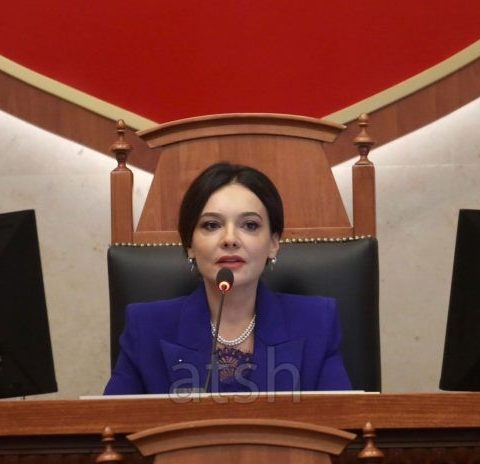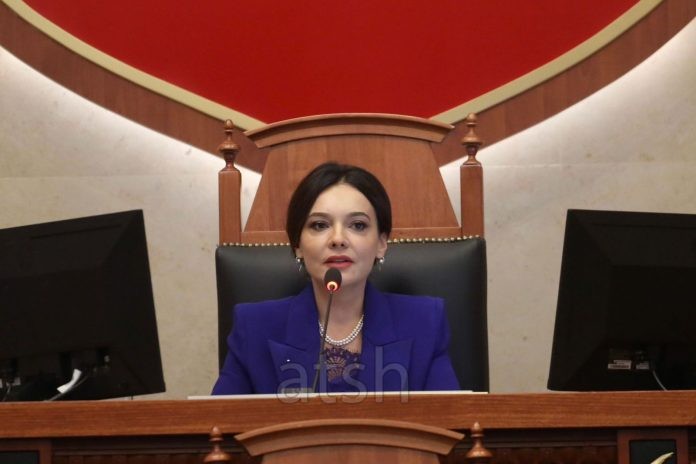
The former parliament speaker and foreign minister faces criminal scrutiny amid an escalating Socialist Party power struggle, accusing former Deputy Prime Minister Belinda Balluku of continuing to control parts of the government and urging Prime Minister Edi Rama to break with her political model.
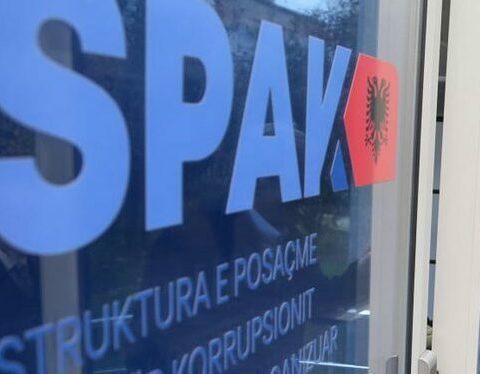
TIRANA, Albania — Albania’s Special Prosecution Office Against Corruption and Organized Crime (SPAK) has reportedly opened criminal proceedings following complaints involving Elisa Spiropali, the former parliament speaker and foreign minister, marking a dramatic new chapter in the downfall of one of Prime Minister Edi Rama’s once most loyal and influential political allies. The investigation comes days after Rama moved to exclude Spiropali from the leadership structures of the ruling Socialist Party, amid an increasingly bitter struggle between rival factions within Albania’s governing majority. According to Albanian media reports, SPAK registered proceedings in late October following complaints alleging false asset declarations, concealment of wealth, money laundering, abuse of office and corruption. Investigators are reportedly examining financial transactions, commercial records, property ownership and assets associated with Spiropali and members of her family, including her husband, Salarjon Totaj.
The proceedings were reportedly registered without identifying a specific defendant by name. SPAK has not publicly confirmed the full details of the case. The allegations remain unproven, and the registration of criminal proceedings does not establish wrongdoing by Spiropali or her relatives. The development follows a succession of political setbacks for Spiropali, who was dismissed as foreign minister in February 2026 during a government reshuffle that also removed then-Deputy Prime Minister Belinda Balluku amid corruption allegations. Rama offered no detailed public explanation for Spiropali’s dismissal, fueling speculation about internal rivalries and disagreements over Balluku’s influence. Spiropali has since linked her removal to the Balluku affair, while rejecting suggestions that she had spoken against the former deputy prime minister to Albania’s international partners. She said her only political act concerning Balluku was refusing to participate in a parliamentary vote on her immunity, arguing that she could not legitimize the governing model Balluku represented.
The confrontation intensified on Nov. 14, when Rama demanded the exclusion of Spiropali and former Socialist lawmaker Plarent Ndreca from party leadership structures. Senior Socialists Pandeli Majko, Fatmir Xhafaj and Erion Braçe reportedly opposed the move. On Saturday, Rama publicly described Spiropali and Ndreca as excluded from the party, although questions remained over the formal procedures governing their membership.
Spiropali’s most explosive accusations, however, have been directed at Balluku. In a televised interview with Top Channel on Nov. 19, she alleged that the former deputy prime minister continues to exercise considerable influence over the government and state administration through ministers and senior officials appointed during her tenure. Spiropali described Balluku as the worst example of the governing model developed inside the Socialist Party, characterized, she said, by concentrated power, personal favors, political patronage and the disappearance of internal checks and accountability.
She claimed that Balluku still controls important state institutions despite her dismissal and ongoing legal troubles. According to Spiropali, the former deputy prime minister has used that influence to intimidate political opponents, including Spiropali herself and members of her family.
Spiropali specifically named Tax Administration Director Ilir Binaj, describing him as a personal appointee of Balluku. She also referred to ministers allegedly owing their positions to the former deputy prime minister and portrayed the government as divided between competing centers of influence. Her allegations went further, suggesting that state institutions had been used to exert pressure on her family, including through tax inspections. She said such pressure had reached her home and warned that if a former parliament speaker could be subjected to intimidation, ordinary citizens and anti-government protesters might be even more vulnerable. Binaj strongly rejected the accusations, denying any personal connection with Balluku and accusing Spiropali and her husband of pressuring tax inspectors. He said inspections of family-linked businesses had uncovered suspicions of large-scale tax evasion and that the findings were being referred to law enforcement authorities.
Neither Spiropali’s allegations of politically motivated pressure nor the tax authorities’ allegations of wrongdoing by her family have been established by a court. In perhaps her most politically significant intervention, Spiropali directly appealed to Rama to distance himself from Balluku and the system of power she allegedly represents. She warned that the prime minister risked undermining his political legacy by allowing the Socialist Party to become a shield for individuals facing serious questions about their conduct. While acknowledging Rama’s achievements, particularly in Albania’s international relations, she argued that preserving his political legacy required a fundamental break with the existing governing model.
Spiropali urged Rama to make what she called a “divorce” from those practices, demanding greater meritocracy, internal competition, accountability and transparency in the appointment of ministers and senior officials. Her criticism was directed not only at Balluku personally but also at the centralized system that, she argued, had allowed powerful individuals to distribute political and economic favors through personal connections, telephone calls and informal arrangements. The confrontation is particularly striking because Spiropali spent years as one of Rama’s most outspoken defenders. She continues to acknowledge him as her political mentor, but now argues that his government has become vulnerable to competing networks of influence operating within the Socialist Party.
The sequence of events her dismissal from government, exclusion from party leadership, and the disclosure of criminal proceedings- raises questions about the relationship between factional political conflicts and the actions of state institutions. There is, however, no established evidence that SPAK’s investigation was initiated for political reasons. For Rama, the affair represents a growing political challenge. His former ally is openly questioning the distribution of power within his government, while corruption allegations and internal rivalries increasingly threaten the unity of the party he has led for more than two decades. What began as an internal political disagreement has now developed into an extraordinary confrontation involving two former senior government figures, allegations of institutional intimidation and a criminal investigation. Beyond Spiropali’s personal political future, the affair raises a larger question: whether Albania’s state institutions operate independently of the rival political networks competing for power inside the governing Socialist Party.