
TIRANA, Oct. 04 – With the recent political shuffling on both opposing sides it seems that the country’s economy has lagged behind, their interests.
The Democratic Party government of Prime Minister Sali Berisha and the opposition Socialist party of Edi Rama for the moment seem more interested to accuse each other of different criminal complaints, abuse of public funds, than to really focus on the country’s economy at a bad moment worldwide.
Albania is not that much affected by the global economic crisis and it still remains with an economic growth in sight.
And there have been some really good news for Albanians in the last week.
The government formally sold its state-owned Albpetrol oil company for 850 million euros ($1.1 billion) to the U.S.- and Singapore-based Vetro Energy consortium, as Berisha said Wednesday. The Vetro Energy is also entitled to explore and exploit offshore oil and gas fields, build a refinery, and transport and distribute natural gas in Albania for 25 years.Albpetrol, based in Patos, 75 miles (120 kilometers) south of the capital Tirana, has valued its assets at about 320 million. These assets include six oil fields, four gas fields, and 3,000 oil wells out of which around 1,200 are in operation.
In another move in New York last week Italy, Greece and Albania signed an agreement on Friday showing political support for the Trans Adriatic Pipeline. The fact that the deal was signed on the sidelines of a United Nations meeting gave TAP a moment of global glory.”Concluded on the margins of the United Nations General Assembly meeting in New York, and in the presence of representatives from the U.S. government, the Memorandum of Understanding provides TAP with the necessary political support to continue its commercial activities in Italy.”The agreement is indeed important. TAP desperately needs political support, which is crucial for the development of any pipeline and demonstrates that governments will spend time and political capital making sure that the project gets built.
But not everything going so well in the tiny western Balkan country.
The government has shown anger with the Czech power utility CEZ for not importing power. The CEZ on its side said it would hire U.K.-based law firm Schindlers to negotiate with the Albanian government in a dispute over CEZ’s failure to import power last month.CEZ Shperndarje Sh.a. angered the government and the regulator ERE when it failed to import power in September, forcing the state-owned KESH power producer monopoly to use up its water reserves to supply CEZ Shperndarje.CEZ Shperndarje holds a monopoly on power distribution to homes in Albania and is bound by law to use imports to make up for any power losses – from technical faults or theft – in its grid in the hydro-dependant Balkan nation. Prospects do not seem that bright for power production and consumers this winter.
And what seemed really important was the warning from the International Monetary Fund that Albania had better use the money earned from the Albpetrol privatization to reduce its government debt. The public debt has risen to risky levels for the economic stability, just below 60 percent of gross domestic product, a limit set by Albanian law.
True that Albania has avoided a recession, but still the aftershocks of the financial crisis are having their negative impact on the growth. And Albania’s public debt is the highest in the Balkans.
The IMF said its forecast for Albania’s economic growth for 2012 was at 0.5 percent but revised its estimate for 2013 down to 1.3 percent from 1.7 percent.
Tirana does not agree. Berisha also directly mentioned the case adding that the IMF has that form of its policy, which they agree, but they have always revised their forecast in previous years.
The Finance Minister Ridvan Bode said that public debt was not asdangerous as it was funded by domestic instruments and development loans with low interest rates.
The Albpetrol sale seems to be at a very good moment for the government ahead of the parliamentary elections next June.
Politics aside, where’s the economy?

Change font size:
Latest from News
SPAK Seeks Confiscation of €9.1 Million in Assets Linked to Suspected Criminal Networks
Change font size: - + Reset The request, submitted on November 17, concerns 24 real estate properties, three luxury vehicles and shares in four commercial companies, as well as a business registered
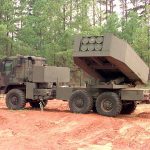
US Approves Possible $210 Million HIMARS Sale to Albania
Change font size: - + Reset The proposed acquisition will draw on the US Foreign Military Financing (FMF) programme, under which Albania secured a $302 million direct loan agreement earlier this year.

171st Day of Student Protests Sees Clashes With Police Outside Prime Minister’s Office
Change font size: - + Reset TIRANA, Albania – The student-led and broader citizen protests against Prime Minister Edi Rama’s government continued in Tirana on Tuesday, with clashes between demonstrators and police
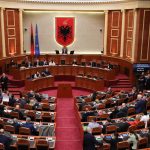
Parliament Debates 2027 Budget With 13 Opposition MPs Sidelined
Change font size: - + Reset The opposition’s Democratic Party is participating with a reduced parliamentary group following disciplinary measures against 13 of its lawmakers. TIRANA, Albania – Albania’s Parliament is debating
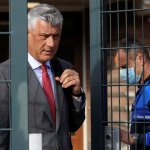
Hague Court Adds 17 Months to Kosovo’s ex-President Thaci’s 25-Year Sentence
Change font size: - + Reset Prosecutors said Thaci, 58, used visits at the court’s detention unit to pass instructions on what witnesses should say in his war crimes case. THE HAGUE,