The Regional Cooperation Council’s 2026 SecuriMeter survey revealed widespread distrust in public institutions, growing dissatisfaction with living conditions, and a strong desire among young Albanians to seek opportunities abroad.
TIRANA, Albania – Corruption, the rising cost of living, and the continued exodus of young people are among the biggest concerns for Albanians, according to a new regional survey by the Regional Cooperation Council (RCC), which paints a picture of mounting public frustration with the country’s political institutions and economic prospects.
The 2026 SecuriMeter survey, conducted between Sept. 1 and 17 among 6,003 people across the six Western Balkan economies, found that 92.1% of Albanian respondents consider corruption very or fairly widespread, the highest proportion in the region. More than 60% also believe corruption has increased over the past three years, while confidence in political parties, Parliament and the government remains particularly low.
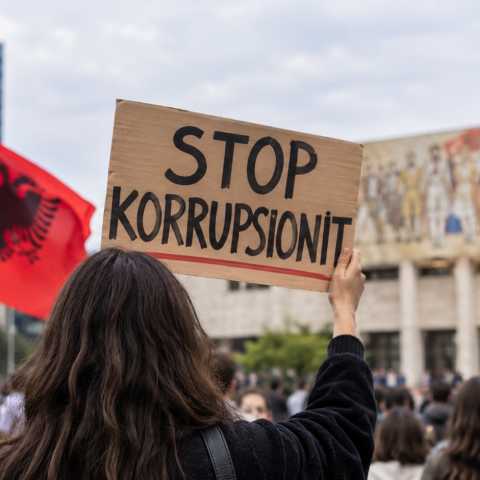
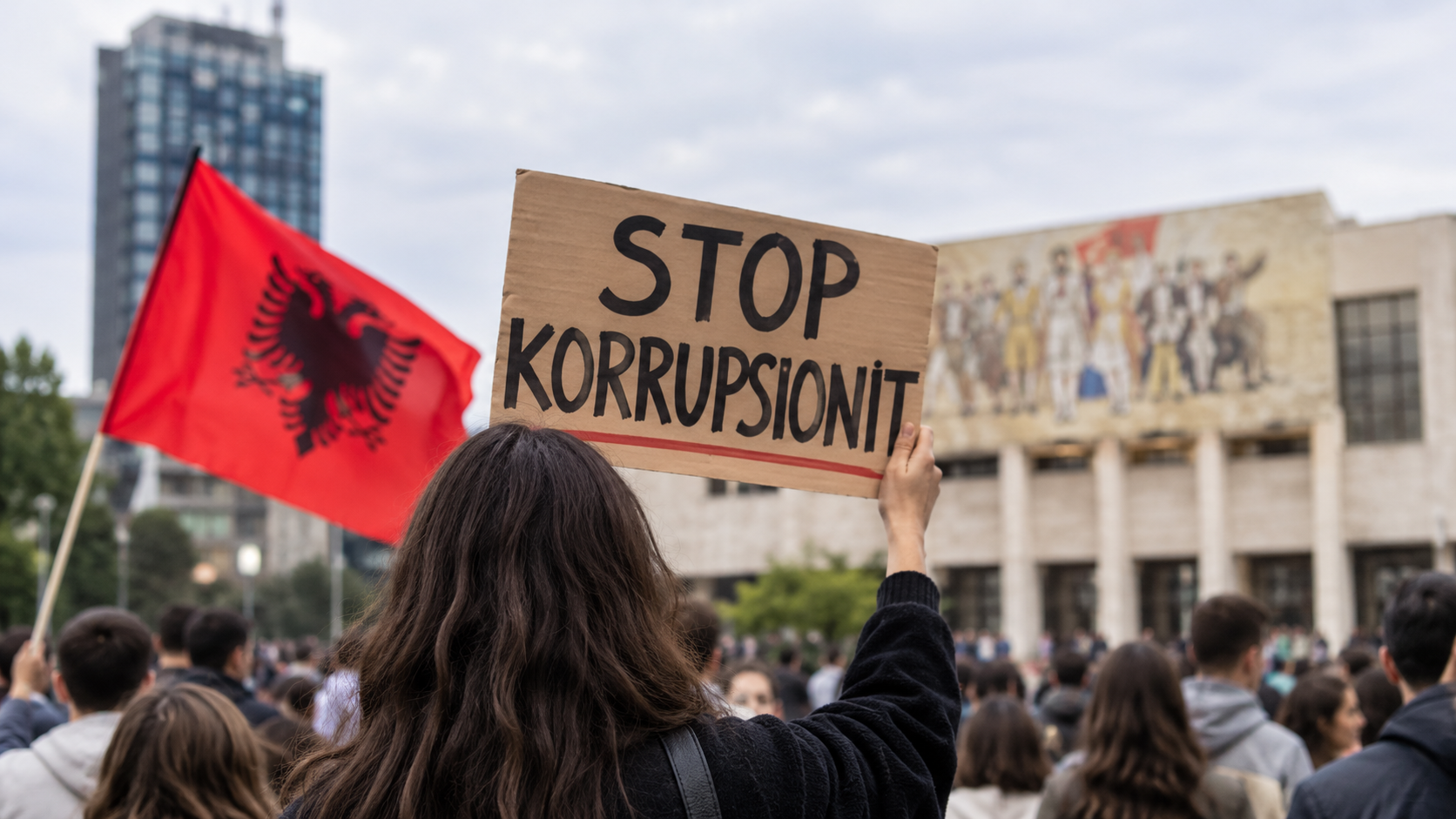
The findings come amid growing public discontent in Albania, where allegations of corruption, economic pressures and limited opportunities have increasingly become central to political debate and student-led demonstrations demanding government accountability.
Corruption and distrust in public institutions
Corruption stands out as one of the most striking findings of the survey. Albania recorded the highest level of perceived corruption among the six Western Balkan economies.
Some 92.1% of respondents said corruption was very or fairly widespread, compared with a regional average of 76.5%. Only 6.7% considered it fairly or very rare, while just 0.4% said there was no corruption.
Public perceptions have also deteriorated. According to the survey, 60.8% of Albanians believe corruption has increased over the past three years, compared with 16.6% who believe it has decreased and 20.1% who say it has remained unchanged.
The public’s perception of corruption comes against the backdrop of a series of high-profile investigations targeting senior figures in Prime Minister Edi Rama’s Socialist Party government. Tirana Mayor Erion Veliaj has been held in pretrial detention since February 2025, facing charges including passive corruption, money laundering and concealment of assets.
Former Deputy Prime Minister Arben Ahmetaj, meanwhile, remains on the run after fleeing Albania in 2023, following an arrest warrant issued by SPAK over alleged corruption, money laundering and concealment of assets in connection with the multimillion-euro incinerator concessions scandal. The case has also implicated former Environment Minister Lefter Koka, who was convicted in connection with the Fier incinerator, and former Socialist lawmaker Alqi Bllako.
More recently, former Deputy Prime Minister and Infrastructure Minister Belinda Balluku became one of the most prominent figures investigated by SPAK. She faces charges involving alleged manipulation of nine public procurement procedures, passive corruption, concealment of assets and money laundering, linked in particular to the Llogara Tunnel and Tirana’s Great Ring Road projects.
On Nov. 16, SPAK submitted the case against Balluku and 27 other defendants and legal entities for trial. The controversy has also intensified political tensions after Parliament rejected a request to lift her parliamentary immunity, preventing her arrest at that stage. Although Rama dismissed Balluku from her government positions in February, the government’s handling of the case has fueled accusations of political protection and selective accountability.
However, public concerns extend beyond individual cases and reflect a broader lack of confidence in the integrity of state institutions. For example, concerns over the misuse of public funds have also extended to European Union financing. An investigation by the European Anti-Fraud Office (OLAF) into Albania’s IPARD II agricultural support program found that approximately 33 million euros in EU grants had been misused or irregularly allocated.
The findings prompted the European Commission to suspend further funding under the program, leaving Albanian farmers unable to access new EU agricultural grants while the irregularities were investigated. The scandal further damaged confidence in the country’s management of international funds and raised questions about oversight and accountability within public institutions.
Cost of living and economic insecurity dominate public concerns
Economic dissatisfaction is another defining feature of the survey, with the cost of living and inflation emerging as the most widespread concern among Albanian respondents.
An overwhelming 96.6% said they were concerned about rising prices and the cost of living, compared with 83.4% across the Western Balkans. Depopulation and emigration followed at 95.1%, while 79.9% expressed concern about job opportunities and wages.
Unemployment also remains a significant issue, with 70.4% of respondents identifying it as a concern.
The figures reflect the pressure facing households despite the country’s economic growth and expanding tourism sector. While economic indicators may point to growth, the survey suggests that many citizens remain concerned about whether that growth translates into better living conditions, affordable services, and stable employment.
The household affordability findings provide a more concrete picture of these pressures. Only 35.4% of Albanian respondents said they could cover an unexpected expense of 1,000 euros without borrowing money or relying on help from others.
Access to basic services is another major source of dissatisfaction. Only 22.5% expressed satisfaction with health care services and 22.4% with education. Satisfaction with housing availability and affordability was particularly low, at just 3.6%, the lowest figure among the six Western Balkan economies.
Public safety, organized crime, and concerns over democratic standards
Beyond economic pressures and corruption, the survey identifies several other issues relevant to Albania’s current political and social climate.
Some 76.5% of respondents expressed concern about organized crime, while 77.4% were concerned about the erosion of democratic and human rights. Political instability worried 75% of respondents, while 87.3% expressed concern about cybercrime and online fraud.
The survey also points to serious concerns about the reliability of public information. A striking 95.8% of Albanian respondents believe political parties sometimes or often spread false or misleading information, while 93.6% said the same about politicians.
Growing dissatisfaction meets demands for political accountability
Despite the widespread dissatisfaction, the survey suggests that Albanians continue to place considerable importance on democratic principles. Nearly 99% consider free and fair elections important, 97% value freedom of expression, and 94% say accountability for corruption is important.
However, the gap between these expectations and public confidence in the country’s institutions remains substantial.
The findings also reveal a troubling lack of confidence in Albania’s ability to withstand major crises. Some 75.8% of respondents said they had little or no confidence that their local communities could recover from a serious crisis, such as a natural disaster, pandemic, or economic collapse.
The results provide a broader context for the growing wave of student-led and citizen protests against Prime Minister Edi Rama’s government. Demonstrations that initially emerged around environmental concerns have expanded into a wider movement addressing corruption, the cost of living, education, public services and the lack of opportunities for young people.
Students have increasingly called for Rama’s resignation, arguing that the country’s political and economic direction offers little prospect for their future. On Nov. 21, student activists announced the creation of a nationwide movement to coordinate further demonstrations and called for broader mobilization ahead of a national protest planned for Nov. 28.